

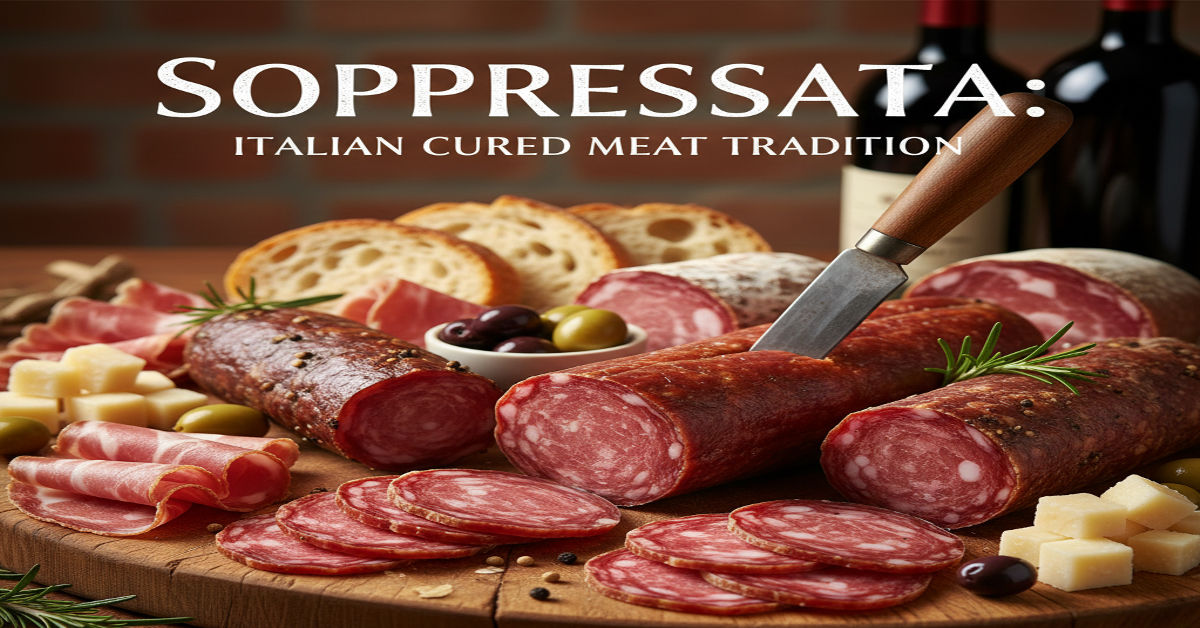
Soppressata is a traditional Italian dry-cured salami known for its coarse texture, robust flavor, and distinctive flattened shape. It is more than a type of salume; it is a reflection of Italian culinary heritage and regional identity. Originating in southern Italy, soppressata was historically produced to preserve meat in times before refrigeration. Families would come together during the winter pig slaughter or la maialata, to process the animal, ensuring that no part went to waste. Through this process soppressata became a staple of rural life, offering sustenance and a medium for community celebration.
What sets soppressata apart is its preparation. The meat is coarsely chopped, seasoned with salt, pepper, and sometimes wine or chili, then stuffed into natural casings. It is pressed to remove air and moisture, resulting in its trademark flattened form. This pressing process concentrates flavor and creates a firm texture. Today, soppressata has become a culinary symbol worldwide, bridging artisanal tradition with contemporary cuisine. Its evolution reflects both the enduring importance of craft and the adaptability of regional foods in global gastronomy.
The Origins of Soppressata
Soppressata originated in southern Italy, particularly in Calabria, Basilicata, and Apulia. The environmental conditions in these regions, including dry air and cool breezes, were ideal for curing meat. The term soppressata comes from soppressare, meaning to press down. Pressing the meat is central to its production, influencing texture and flavor.
Historically, soppressata was part of communal ritual. Families and neighbors gathered during la maialata to butcher the pig. Each family had its methods and spice blends, contributing to the rich diversity of regional flavors. Calabria, for instance, incorporated chili peppers for heat, while Basilicata favored garlic and fennel seeds. Apulia sometimes used wine in the seasoning, enhancing the aromatic profile. Some varieties, such as Soppressata di Calabria, now carry protected designation of origin status to safeguard traditional practices.
Regional Variations
Italy’s regions contribute unique interpretations of soppressata. Southern varieties are more traditional and robust, while northern adaptations reflect local culinary practices.
| Region | Flavor Profile | Key Ingredients | Texture |
| Calabria | Spicy, bold | Chili peppers, black pepper | Firm and deep red |
| Basilicata | Mild, earthy | Garlic, fennel seeds, pepper | Coarse and balanced |
| Apulia | Aromatic | Wine, garlic, herbs | Smooth and hearty |
| Tuscany/Liguria | Varied | Mixed cuts, spices | Dense and unique |
Calabria’s soppressata is fiery and deeply colored, aged for months. Basilicata produces milder versions emphasizing natural pork sweetness. Apulia’s includes local white wine for aroma. Northern regions, including Tuscany, feature variations sometimes using boiled meat from the pig’s head, resulting in a different taste and texture. These regional styles reflect Italy’s culinary diversity and the local character of each area.
Craftsmanship and Production
Soppressata is a product of artisanal craftsmanship. Unlike mass-produced salamis, authentic soppressata relies on hand-cut pork, natural casings, and controlled curing conditions. The slow drying and pressing allow microbial and enzymatic processes to enhance flavor.
Producers face the challenge of balancing tradition with commercial demand. PDO regulations for Soppressata di Calabria enforce specific production methods, from meat selection to aging duration. Small family operations continue traditional methods, yielding distinctive flavors.
Texture and aroma are central to quality. Properly made soppressata shows marbling of lean and fat. Its scent is peppery and earthy, indicative of the regional terroir. Culinary professionals value its versatility. Thin slices accompany cheese and bread. Diced soppressata enriches pasta, pizzas, and sauces. Chefs also pair it with figs, honey, and burrata, connecting traditional flavors with contemporary presentations.
Culinary Pairings
| Pairing Category | Traditional Pairings | Contemporary Twists |
| Cheese | Pecorino, caciocavallo | Gorgonzola, aged cheddar |
| Wine | Aglianico, Primitivo | Pinot Noir, Syrah |
| Bread | Pane casereccio | Sourdough, focaccia |
| Appetizers | Olives, roasted vegetables | Fig jam, honeycomb |
Soppressata’s flavor allows it to complement robust wines, creamy cheeses, and sweet-savory dishes. It can appear in rustic antipasti as well as high-end culinary creations.
Expert Perspectives
Chef Marco Rossi, an Italian charcuterie specialist, notes, “Soppressata is the essence of Italian regional identity. Each slice tells the story of a specific village.”
Food historian Carla Bianchi emphasizes, “The pressing method defines not only texture but also flavor concentration. It is a technique preserved across centuries.”
Culinary consultant Luca Ferraro adds, “Pairing soppressata requires attention to balance. Its spice and fat content demand complementary wines or cheeses to enhance the tasting experience.”
Takeaways
- Soppressata reflects centuries of Italian meat preservation and cultural rituals.
- Regional variations illustrate local ingredients and culinary identity.
- Artisanal methods ensure quality through hand-cut meat, natural casings, and careful curing.
- The cured meat is versatile in traditional and contemporary dishes.
- PDO protections preserve authentic regional production methods.
- Flavor and texture are closely linked to pressing and aging processes.
- Its enduring appeal bridges heritage and modern gastronomy.
Conclusion
Soppressata is both a culinary product and a cultural artifact. Its production encapsulates Italian traditions, community practices, and regional diversity. From Calabria to Tuscany, variations showcase local tastes, climates, and approaches to meat preservation.
The art of making soppressata demonstrates the importance of craftsmanship in food. Its enduring presence in modern cuisine underscores a broader human desire to connect with heritage through taste. Whether enjoyed in a rural village or on a metropolitan charcuterie board, soppressata carries with it centuries of history and the distinctive flavors of Italian terroir. Its significance extends beyond flavor, representing the ongoing relationship between culture, place, and culinary tradition.
FAQs
What is soppressata?
Soppressata is a traditional Italian dry-cured salami made from coarsely cut pork, seasoned, pressed, and aged.
Where does soppressat’a originate?
It originates in southern Italy, primarily Calabria, Basilicata, and Apulia.
How is soppressat’a different from other salamis?
Its coarse texture, pressing process, flattened shape, and regional spices distinguish it.
How should soppressat’a be served?
Sliced thin with cheese, bread, and wine, or incorporated into pasta, pizza, or appetizers.
Does soppressat’a have legal protection?
Yes, some varieties like Soppressat’a di Calabria have PDO status to maintain traditional methods.
References
Dop Italian Food. (n.d.). Soppressat’a of Calabria Salami P.D.O. https://dopitalianfood.com/en/brands-dop-italian-food/sausages%2C-salami-pdo-pgi/soppressata-of-calabria-salami-pdo.html
La Cucina Italiana. (n.d.). What is Soppressat’a: Definition and Meaning. https://www.lacucinaitaliana.com/glossary/soppressata
LiveBeyondSports. (2025). Soppressat’a: The Timeless Italian Art of Cured Salami, Tradition, and Taste Reimagined for the Modern World. https://livebeyondsports.com/soppressata-the-timeless-italian-art-of-cured-salami-tradition-and-taste-reimagined-for-the-modern-world/
Quate. (2025). Soppressat’a: Traditional Italian Cured Meat, Varieties & Recipes. https://quate.net/soppressata/
Wikipedia. (2025). Soppressat’a. https://en.wikipedia.org/wiki/Soppressata