

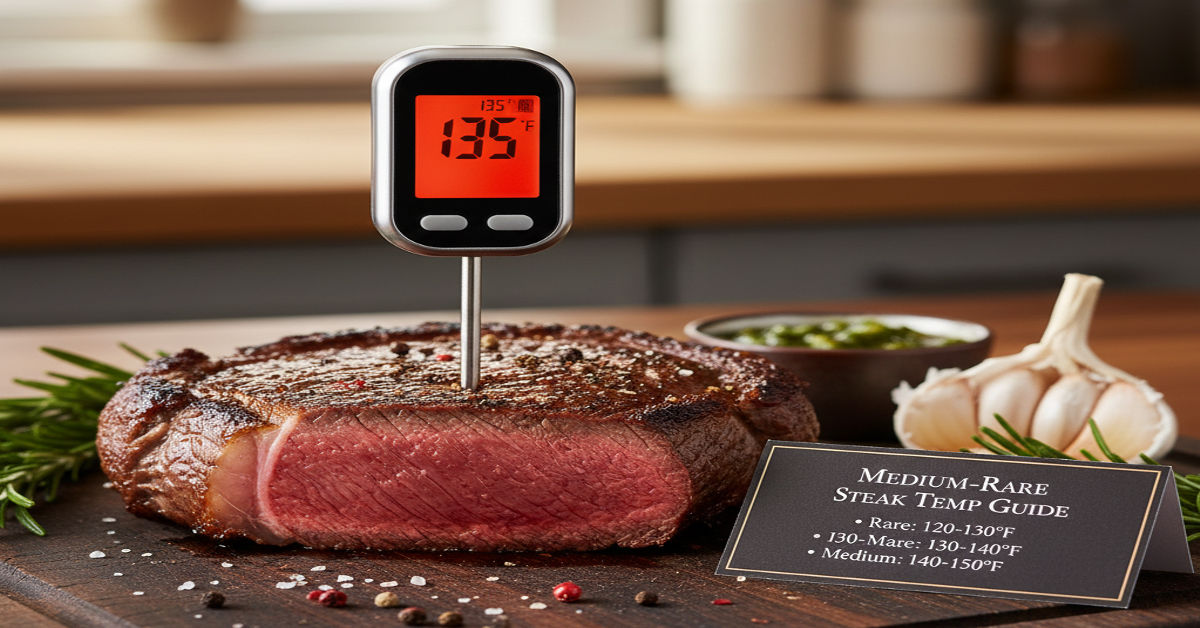
For steak enthusiasts achieving a perfect medium‑rare steak is less about guesswork and more about precision. Medium‑rare is defined by an internal temperature of 130–135°F (54–57°C), creating a warm red center that is tender, juicy and flavorful. Medium Rare Steak Temp range optimizes the denaturation of proteins, melting of intramuscular fat and retention of juices delivering the balance that many consider the pinnacle of steak doneness.
While this ideal temperature sits below the USDA’s recommended 145°F, chefs and culinary experts have long defended it as the sweet spot for texture and flavor. By understanding the science behind protein behavior and heat transfer, home cooks and professionals alike can reproduce steakhouse-quality results. This article explores the science, techniques, and safety considerations that make medium-rare steak both an art and a science, offering guidance for grilling, pan-searing and sous-vide methods.
Understanding Medium-Rare: The Science of Temperature
Medium-rare isn’t defined by color alone. The 130–135°F range ensures a warm red center and a tender bite. Above this, the steak begins to lose moisture, while below, it remains cool and undercooked. Temperature provides the most reliable measure of doneness, more so than appearance or touch.
At this range, connective proteins firm just enough to support texture, while fat within the meat begins to melt, enhancing richness. Cooking beyond 135°F accelerates moisture loss, transforming tender cuts into tougher meat. Precision is crucial: even a few degrees can dramatically alter the eating experience.
| Doneness Level | Internal Temperature (°F) | Center Description |
| Rare | 120–129 | Cool red center |
| Medium-Rare | 130–135 | Warm red center |
| Medium | 135–145 | Pink center |
| Well-Done | 155+ | No pink |
Tools and Techniques for Precision
Achieving perfect medium-rare requires reliable tools. While traditional visual or touch tests can offer clues, an instant-read thermometer ensures accuracy. Insert the probe into the thickest part of the steak, avoiding fat or bone, and remove the steak when it reads 5°F below the target to account for carryover cooking.
| Method | Reliability | Notes |
| Touch test | ★★ | Quick but subjective |
| Visual cues | ★★ | Affected by lighting and pH |
| Thermometer | ★★★★★ | Most accurate for internal temp |
| Sous-vide | ★★★★ | Ensures uniform edge-to-edge doneness |
Modern cooking techniques make precision more attainable. Grilling requires high heat and careful monitoring, typically 4–6 minutes per side for 1–1.5-inch steaks. Pan-searing develops a Maillard crust, followed by oven finishing to hit the target temperature. Sous-vide allows for edge-to-edge consistency, holding the steak precisely in the medium-rare range for extended periods.
Safety and Culinary Considerations
The USDA recommends a minimum internal temperature of 145°F for whole muscle beef, followed by a three-minute rest, to ensure pathogen reduction. Medium-rare, sitting below this threshold, remains a common choice for chefs due to meticulous meat sourcing and handling practices.
Balancing safety with sensory preference requires awareness of risk and informed preparation. For populations with higher vulnerability—children, pregnant individuals, or immunocompromised diners—following stricter temperature guidelines is advisable. In professional kitchens, sourcing high-quality meat and maintaining proper storage mitigates most safety concerns.
Expert Perspectives
“Temperature is what truly defines doneness. Color and texture are clues, but only internal temp tells you you’ve hit medium‑rare.” – Culinary science expert
“The perfect medium‑rare steak results from controlled heat and precise timing. Even a few degrees make the difference between tender and tough.” – Professional chef
“Pulling steak at the right moment and letting it rest is where technique meets kitchen science.” – Steak preparation authority
These insights underscore that mastery comes from combining tools, knowledge, and attentive technique rather than relying solely on intuition.
Cooking Techniques in Detail
Grilling
High heat sears the exterior quickly while allowing the interior to approach 130–135°F. A 1–1.5-inch steak often reaches medium-rare in 4–6 minutes per side, with constant monitoring to prevent overshooting.
Pan-Searing
Cast iron provides even heat and an ideal surface for a Maillard crust. After searing both sides, finishing in a moderate oven ensures even temperature throughout.
Sous-Vide
This method offers the most precise control. By holding the steak at 130–135°F for a set duration, the meat achieves uniform medium-rare doneness without the risk of overcooking.
Takeaways
- Aim for 130–135°F for warm, red medium-rare doneness.
- Always use a thermometer for accuracy.
- Remove the steak slightly early to allow for carryover cooking.
- USDA guidelines recommend 145°F, but many chefs safely serve lower.
- Sous-vide provides consistent edge-to-edge medium-rare results.
Conclusion
Medium-rare steak represents the intersection of science, technique and flavor. The 130–135°F range balances protein structure, fat rendering, and moisture retention, creating a tender, juicy experience that appeals to chefs and home cooks alike. While safety guidelines exist, understanding the science of heat transfer and carryover cooking allows informed decisions. Grilling, pan-searing, and sous-vide each offer paths to achieving this ideal, highlighting that mastery lies in precision, attention, and knowledge rather than chance. Medium-rare remains a benchmark of culinary skill—a testament to the artistry and science of cooking beef.
FAQs
What is the ideal internal temperature for medium-rare steak?
130–135°F (54–57°C) provides a warm red center and optimal juiciness.
Do I need a thermometer to cook medium-rare steak?
Yes, an instant-read thermometer ensures accurate and reliable results.
Why does steak’s temperature rise after cooking?
Carryover cooking allows residual heat to raise internal temperature by several degrees during resting.
Is medium-rare steak safe to eat?
With high-quality meat and proper handling, medium-rare is widely considered safe for healthy adults.
How long does a steak take to reach medium-rare?
Approximately 4–7 minutes per side on high heat for a 1–1.5-inch steak depending on cooking method.
REFERENCES
Pillsbury. (n.d.). Steak Cooking Temperatures Guide. https://www.pillsbury.com/how-to/prep-method/steak-cooking-temperatures Pillsbury.com
ThermoWorks. (n.d.). The ThermoWorks Guide to Steaks—Temps and Cuts. https://blog.thermoworks.com/beef/steak-temperatures-ordering-and-buying-guides/ ThermoWorks
NutritionalLine. (n.d.). Medium Rare Steak Temp: The Ultimate Guide. https://www.nutritionalline.com/medium-rare-steak-temp-the-ultimate-guide/ Nutritional Line
Meatman. (n.d.). Steak Temperature & Doneness Chart. https://meatman.com/pages/steak-temperatures Meatman®
Serious Eats. (2013). Sous Vide Steak Guide. https://www.seriouseats.com/food-lab-complete-guide-to-sous-vide-steak Serious Eats