

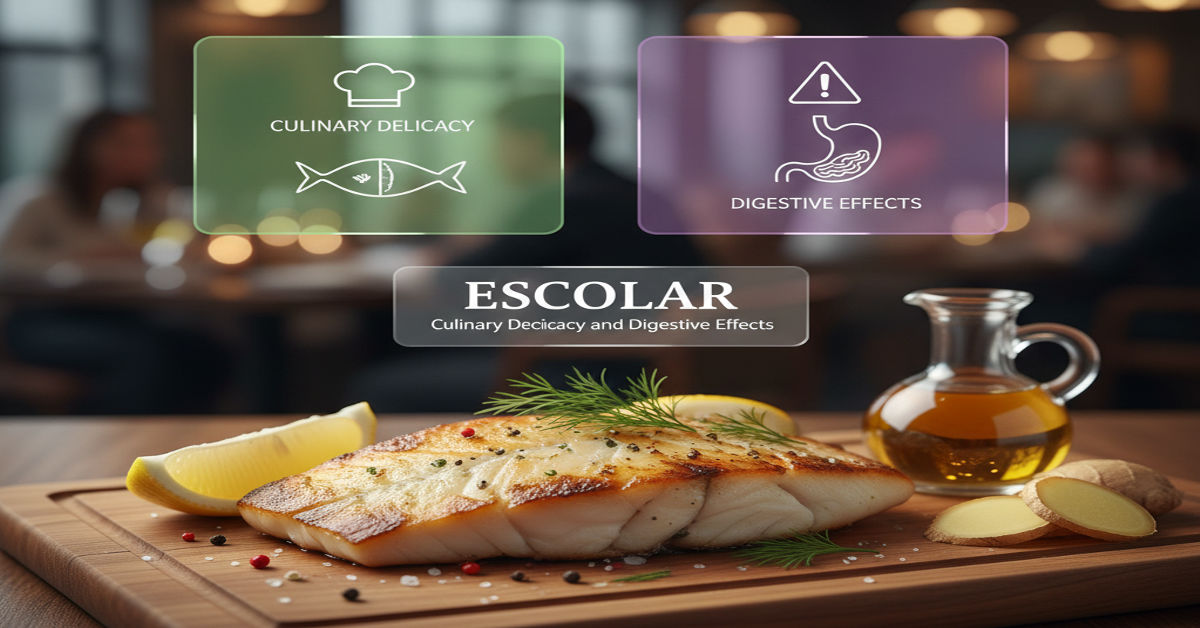
Escolar (Lepidocybium flavobrunneum) has captured the imagination of food enthusiasts worldwide. Known for its firm texture and buttery mouthfeel, this deep-sea fish has become a sought-after ingredient in sushi, sashimi and gourmet seafood dishes. Yet its appeal comes with a cautionary note that very compounds that give escolar its signature flavor can provoke significant digestive reactions in humans.
The central question arises: why does a fish so prized in high-end cuisine carry a notorious reputation? The answer lies in its high concentration of wax esters—indigestible compounds that the human gastrointestinal system cannot process efficiently. These esters can cause keriorrhea, a condition marked by oily diarrhea and abdominal discomfort, especially after large portions.
Beyond the biological and culinary aspects, escolar’s story intersects with public health, food labeling and international regulation. Some countries ban its sale entirely, while others permit limited consumption with clear advisories. This article explores escolar’s biology, preparation, global culinary practices, health effects and safe consumption guidelines, providing a comprehensive look at why this fish continues to fascinate, delight and caution diners alike.
Deep-Sea Origins and Biology
Escolar belongs to the Gempylidae family, a group of deep-water predatory fish. Adults inhabit tropical and temperate waters at depths often exceeding 200 meters, surfacing occasionally at night to hunt squid, smaller fish and crustaceans. With a streamlined body, prominent lateral keels, and multiple finlets, escolar is built for speed and agility in the deep ocean.
The wax ester accumulation in escolar is a direct consequence of its diet. Predators in the deep sea process these compounds without issue, but humans lack the enzymes to break them down. A related species, oilfish (Ruvettus pretiosus), shares this trait, though the two are often confused in culinary markets. Despite these unusual biochemical properties, escolar populations are generally stable, classified as of least concern in conservation assessments.
Culinary Reputation and Mislabeling
Escolar is celebrated for its creamy texture and mild, sweet flavor, often marketed as “white tuna” or “butterfish” in sushi and seafood restaurants. Its luxurious mouthfeel has made it a favorite among chefs who value its ability to deliver richness without overpowering seasoning.
However, mislabeling remains a major issue. Restaurants and suppliers sometimes substitute escolar for more familiar species, inadvertently exposing diners to higher health risks. Regulatory responses vary: Japan and Italy have banned escolar entirely due to digestive concerns, whereas the United States allows limited sale with advisories. In culinary practice, awareness of portion size and cut selection is essential to ensure diners enjoy its flavor safely.
The Science of Keriorrhea
The primary concern with escolar consumption is its wax ester content, which can induce keriorrhea—a form of oily diarrhea. Unlike traditional food poisoning, this condition is not caused by toxins but by indigestible compounds passing through the gut largely intact. Symptoms typically appear within 30 minutes to 36 hours, including abdominal cramps, nausea, and oily discharge.
The severity of keriorrhea correlates with portion size and individual digestive sensitivity. Medical reports suggest that limiting servings to approximately 170 grams (6 ounces) and choosing cuts from the tail, which are lower in wax esters, can significantly reduce the risk. Although rarely life-threatening, the condition is uncomfortable and has prompted regulatory advisories and public awareness campaigns in multiple countries.
Global Culinary Practices and Regulation
Cultural perceptions of escolar vary widely. In some regions, chefs embrace its buttery texture as a culinary asset, whereas public health authorities in Japan and Italy have banned its sale. Other nations, including the United States, permit consumption with advisories, encouraging accurate labeling to prevent overconsumption.
Chefs often design dishes around small, balanced portions, pairing escolar with high-fiber sides or incorporating it into multi-course tasting menus. These practices allow diners to enjoy the flavor while minimizing digestive impact. Transparency in labeling is increasingly recognized as crucial for consumer trust, particularly given the prevalence of mislabeling incidents.
Nutrition and Preparation
Nutritionally, escolar is high in protein and provides essential micronutrients like vitamin B12 and selenium. However, its lipid profile differs from other seafood, as its wax esters dominate over typical omega-3 fatty acids. Freezing or cooking does not reduce these compounds, making portion control and cut selection the key methods for safe consumption.
Chefs often sear escolar to enhance flavor and manage oil content, serving it alongside vegetables or grains to balance richness. Awareness of portion sizes and careful menu description are critical, both for consumer safety and maintaining the dish’s reputation in fine dining.
Comparative Overview
| Aspect | Escolar | Common Seafood (Tuna) |
| Wax Ester Content | Very high (~14–25% of flesh) | Low |
| Digestive Risk | Keriorrhea possible with large portions | Minimal |
| Culinary Use | Sushi, seared, grilled | Sushi, steaks, canned |
| Regulatory Status | Banned in Japan & Italy | Generally permitted |
| Mislabeling Risk | High | Moderate |
Adverse Reactions Statistics
| Region / Study | Key Finding |
| Australia | 45–67% may develop symptoms after consumption |
| Symptom Onset | Typically 30 minutes – 36 hours |
| Recommended Serving | ≤170 g per serving |
| Wax Ester Concentration | 14–25% of body weight |
Expert Voices
“Escolar’s effects are not toxic, but humans cannot process large amounts of wax esters. Clear labeling and moderation are essential.” — Dr. Jane Stevenson, Gastroenterologist
“From a culinary perspective, escolar offers unmatched texture and flavor, but chefs must educate diners on portion limits.” — Chef Ricardo Martinez
“Seafood mislabeling undermines consumer trust and can create health risks, particularly with species like escolar.” — Dr. Emily Chen, Marine Policy Researcher
Takeaways
- Escolar is prized for its buttery texture but contains indigestible wax esters.
- These esters can cause keriorrhea—oily diarrhea and abdominal discomfort.
- Limiting portions to 170 grams or less reduces digestive risk.
- Mislabeling as “white tuna” is common and can mislead consumers.
- Some countries ban escolar entirely; others allow consumption with advisories.
Conclusion
Escolar embodies the complex interplay between culinary allure and biological risk. Its rich flavor and texture make it a celebrated ingredient in gourmet cuisine, yet the wax esters that give it its signature profile also demand careful attention. Safe enjoyment requires informed choices: controlling portion size, selecting appropriate cuts, and relying on accurate labeling.
The story of escolar also highlights broader considerations in food culture and regulation. It reminds consumers and chefs alike that luxury in cuisine often comes with responsibility—both for one’s health and for transparency in what is served on the plate. For those willing to navigate its nuances, escolar offers a memorable culinary experience; for others, it serves as a cautionary tale of the hidden complexities within seafood.
FAQs
What causes the digestive effects of escolar?
The indigestible wax esters in escolar can cause keriorrhea, producing oily diarrhea and abdominal cramps.
Is escolar poisonous?
No; the effects are due to wax esters, not toxins, but overconsumption can cause gastrointestinal distress.
Can I safely eat escolar?
Yes, by limiting portions to around 170 grams and choosing cuts with lower wax ester content.
Why is escolar often mislabeled?
Its texture resembles other white fish, leading some vendors to market it as “white tuna” or “butterfish.”
Which countries ban escolar?
Japan and Italy have prohibited its sale due to digestive health concerns.
References
American College of Gastroenterology. (2009). Escholarrhea: Oily diarrhea after ingestion of Escolar fish. The American Journal of Gastroenterology, 104(10), 2503–2505. https://journals.lww.com/ajg/fulltext/2009/10003/escholarrhea___oily_diarrhea_after_ingestion_of.919.aspx
Foodsafety.asn.au. (n.d.). Escolar and oilfish: Information for consumers and industry. https://www.foodsafety.asn.au/escolar-and-oilfish/
Wikipedia contributors. (2025, December 1). Escolar. Wikipedia. https://en.wikipedia.org/wiki/Escolar
Wikipedia contributors. (2025, December 1). Seafood mislabelling. Wikipedia. https://en.wikipedia.org/wiki/Seafood_mislabelling