
For years, KissCartoon felt like a secret passageway on the internet—an endless archive of animated shows, from Saturday-morning classics to late-night anime, all available with a click and no credit card. For students, international viewers and fans priced out of subscriptions, it seemed almost utopian. But that promise was built on unstable ground.
KissCartoon was never just a website. It was part of a broader ecosystem of pirate streaming platforms that thrived in the gaps between copyright law, global enforcement and consumer demand. Its disappearance—and reappearance through countless mirror sites—reflects how entertainment consumption has changed and how aggressively copyright holders now defend their work.
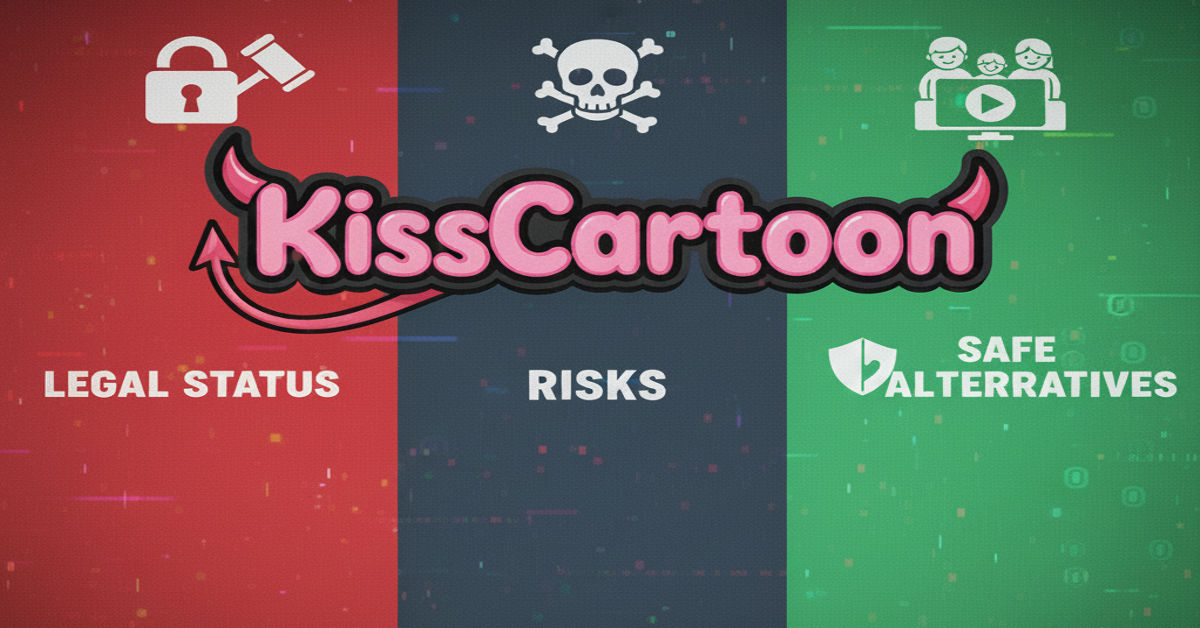
Within the first moments of searching for KissCartoon today, users encounter confusion: dozens of domains, warnings from browsers, pop-ups, redirects and advice threads arguing over whether it’s “safe now.” The short answer is no. The longer answer is more complicated, involving international law, cybersecurity threats and the rapid expansion of legal alternatives.
This article examines KissCartoon in full whether it was ever legal, why it was taken down and blocked in many countries, how dangerous its clones can be, whether VPNs offer real protection, and which legitimate platforms now fill the gap it left behind. The goal is not nostalgia or scolding—but clarity.
What KissCartoon Was—and What It Became
KissCartoon emerged in the early 2010s as a sister site to KissAnime, focusing primarily on Western animation alongside anime. Its interface was simple, its library vast. Users could stream episodes of shows that were otherwise locked behind cable subscriptions, regional licensing barriers, or unavailable entirely in certain countries.
But from its inception, KissCartoon operated without licenses. It did not own the rights to distribute the content it hosted. Instead, it aggregated or embedded video files uploaded without permission. This made it a piracy site under copyright law in most of the world.
As enforcement intensified, the original KissCartoon domain was repeatedly shut down. What followed was fragmentation: dozens of copycat sites using the same name or slight variations, many run by unknown operators. These clones often bore little resemblance to the original in quality or intent, prioritizing aggressive ad monetization over user experience.
Today, when people refer to “KissCartoon,” they are rarely talking about a single site. They are referring to an idea—a rotating constellation of unofficial streaming pages that share a name but not legitimacy or safety.
Is KissCartoon Legal to Use?
Legally, KissCartoon has always occupied shaky ground. Streaming copyrighted material without authorization is illegal in many jurisdictions, particularly for those who host or distribute the content. For viewers, enforcement varies by country.
In the United States, United Kingdom, European Union, Canada, and Australia, copyright law clearly prohibits the unauthorized distribution of protected works. While individual viewers are less frequently prosecuted than site operators, accessing pirated streams can still violate terms of service, trigger ISP warnings, or expose users to civil liability in certain circumstances.
Some countries focus enforcement almost exclusively on distributors, creating the illusion that watching pirated content is “legal.” In reality, it is better described as “rarely prosecuted.” That distinction matters.
The key point is simple: KissCartoon did not have legal permission to stream the shows it offered. Whether consequences fall on the user depends on location, enforcement priorities, and repeat behavior—but the activity itself is unauthorized.
Why KissCartoon Was Taken Down or Blocked
KissCartoon’s takedowns were not sudden or mysterious. They were the predictable result of sustained copyright enforcement by studios, broadcasters, and industry coalitions.
Rights holders used a combination of strategies:
- DMCA takedown notices to hosting providers
- Court orders compelling domain registrars to suspend services
- ISP-level blocking in certain countries
- Search engine delisting to reduce visibility
When one domain disappeared another often surfaced. This cat-and-mouse dynamic is common in piracy enforcement. But each iteration weakened the ecosystem: hosting became more precarious, advertising partners more dubious and security more lax.
In some regions, entire networks of pirate sites—including KissCartoon mirrors—were blocked by ISPs under national copyright frameworks. Users in those countries suddenly saw error messages or blank pages, prompting searches for proxies, mirrors, or VPN solutions.
The disappearance of KissCartoon was not a single event. It was a slow erosion.
Safety Risks: More Than Annoying Ads
Legal concerns aside, the most immediate danger of modern KissCartoon mirror sites is cybersecurity.
Unlike licensed streaming platforms, pirate sites are not vetted by app stores, do not undergo security audits, and often rely on high-risk advertising networks. These ads are not merely intrusive; they can be actively malicious.
Common risks include:
- Malvertising: ads that redirect users to exploit kits or fake updates
- Phishing pages: prompts that mimic browser warnings or login screens
- Drive-by downloads: scripts that attempt to install malware without consent
- Tracking and fingerprinting: aggressive data collection without disclosure
Because many clones lack HTTPS encryption or use outdated scripts, users are exposed even if they do not click anything intentionally. A single misclick can lead to spyware, cryptominers, or browser hijackers.
Unlike legal services, these sites offer no accountability, no support, and no recourse.
How to Protect Your Device from Streaming Site Malware
The safest approach is avoidance. But understanding defensive measures is still useful, particularly for users who encounter risky sites inadvertently.
Practical protections include:
- Keeping operating systems and browsers fully updated
- Using reputable antivirus and anti-malware software
- Installing a well-maintained ad blocker
- Disabling automatic downloads in browser settings
- Never entering personal or financial information on unverified sites
Even with these precautions, no setup can fully neutralize the risks of pirate streaming platforms. Security tools reduce exposure; they do not transform unsafe sites into safe ones.
Legal Alternatives That Replaced KissCartoon
One reason KissCartoon thrived was scarcity. Many cartoons were difficult to access legally, fragmented across networks, regions, and formats. That landscape has changed dramatically.
Today, legal streaming services offer deeper libraries, better quality, and flexible pricing.
Popular Legal Alternatives
| Platform | Access Model | Primary Strength |
| Disney+ | Subscription | Classic and modern animation |
| Crunchyroll | Free + Paid | Anime catalog and simulcasts |
| Tubi | Free with ads | Family and retro animation |
| Pluto TV | Free with ads | Live channels and on-demand |
| Cartoon Network Apps | Mixed | Official network content |
These platforms operate under licensing agreements, meaning creators are compensated and users face minimal legal or security risk. Features like parental controls, subtitles, mobile apps, and consistent video quality are now standard.
The trade-off is cost or ads—but the cost of “free” piracy is often hidden until it’s too late.
The VPN Question: Does It Make KissCartoon Safe?
VPNs are often discussed as a solution to both geo-blocking and privacy concerns. They encrypt traffic and mask IP addresses, making it harder for ISPs to monitor specific browsing activity.
However, a VPN does not change the legal status of the content being accessed. Streaming unlicensed material remains unauthorized regardless of whether a VPN is used.
From a security perspective, VPNs also do not protect users from malicious ads, infected scripts, or phishing pages hosted directly on a site. They can hide where you are—but not what you click.
VPNs are legitimate tools for privacy and security when used responsibly. They are not shields against malware or copyright law.
Ethics and the Cost to Creators
Beyond legality and safety lies an ethical dimension. Animation is labor-intensive. Studios, artists, voice actors, writers, and technicians depend on licensing revenue to sustain production.
When content is consumed through unauthorized channels, it weakens the economic foundation that allows new shows to exist. This is not abstract. Many animation studios operate on thin margins, particularly outside blockbuster franchises.
The rise of affordable, legal streaming has shifted this equation. Supporting licensed platforms directly contributes to the sustainability of the medium.
Takeaways
- KissCartoon was never a licensed streaming service.
- Its takedowns were the result of sustained copyright enforcement.
- Modern mirror sites pose serious malware and privacy risks.
- VPNs do not make illegal streaming legal or safe.
- Legal streaming platforms now offer extensive cartoon libraries.
- Security tools help—but avoidance is the safest strategy.
- Supporting legal platforms supports creators and the industry.
Conclusion
KissCartoon’s story is ultimately about transition. It flourished in a moment when access to animation was fragmented and expensive, and it faded as the streaming landscape matured. What remains is not a reliable service, but a digital echo—replicated, degraded, and increasingly dangerous.
For viewers today, the choice is clearer than it once was. Legal alternatives are plentiful, affordable, and safer than ever. The risks of pirate streaming—legal uncertainty, malware, data exposure—now far outweigh the convenience.
The internet still rewards curiosity. But it also demands discernment. KissCartoon belongs to an earlier chapter of online media—one best understood, not revisited.
FAQs
Is KissCartoon still available?
Various mirror sites exist, but the original service is gone. These clones are unverified and risky.
Can I get in legal trouble for using KissCartoon?
It depends on your country, but streaming unlicensed content is unauthorized and may carry consequences.
Are free cartoon streaming sites always illegal?
No. Some platforms operate legally with ad support and licensing agreements.
Does antivirus software make pirate sites safe?
It reduces risk but cannot eliminate it entirely.
What’s the safest way to watch cartoons online?
Use licensed streaming platforms with established security and legal protections.
References
CroesOffice.org. (2024, October). What is KissCartoon? Everything you need to know. Retrieved from https://croesoffice.org/what-is-kisscartoon-everything-you-need-to-know/
TazaNewsz.com. (2025). KissCartoon: Why this redundant search term gets millions of clicks. Retrieved from https://www.tazanewsz.com/kisscartoon-kisscartoon-why-this-redundant-search-term-gets-millions-of-clicks/
AppQuipo.com. (2026). What is KissCartoon? Safety, legality & top alternatives. Retrieved from https://appquipo.com/blog/kisscartoon-guide/
Explosion.com. (2025). KissCartoon: A complete guide to streaming cartoons online. Retrieved from https://www.explosion.com/151314/kisscartoon/
SafetyDetectives.com. (2024). 6 Best KissCartoon Alternatives in 2026: 100% free & legal. Retrieved from https://www.safetydetectives.com/blog/best-kisscartoon-alternatives/