

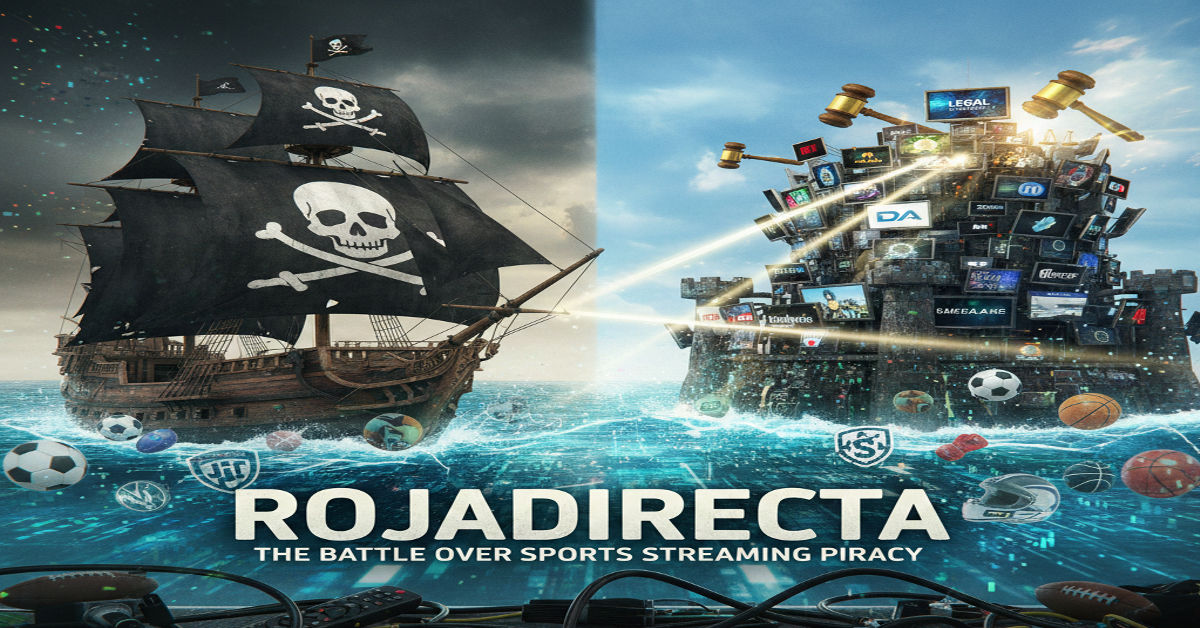
In the global chessboard of online sports consumption, few names have sparked as much passion, controversy and legal conflict as Rojadirecta. Launched in the mid‑2000s, it became a go‑to hub for football fans hunting live links to matches and other sporting events without paying for subscriptions. Users seek access to live sports without official platforms and Rojadirecta has been one of the most enduring — and legally contested — gateways for that purpose. This article maps its rise, how it operates, the legal battles buffeting it across jurisdictions, the audience metrics that show continued interest and why the site remains a focal point in the broader fight over streaming piracy.
The digital landscape of sports broadcasting has undergone seismic shifts over the past two decades. Traditional TV rights inflated into the billions, streaming platforms multiplied, and region‑locked paywalls became the norm. Against that backdrop, Rojadirecta carved a niche — not by hosting streams itself, but by indexing links to feeds hosted elsewhere. To millions of users, it felt like a loophole organized directory of streams for football, basketball, baseball and more. To rights holders and broadcasters, it was a cancer on the value of exclusive broadcast rights eroding paid audiences and revenue.
Yet Rojadirecta’s story cannot be told without legal context. In its early years, some courts interpreted simply listing links as not constituting direct infringement, leading to temporary legal victories for the site. Over time, however, shifting interpretations of intellectual property law, especially within the EU, turned those early wins into long legal droughts. Courts in Spain, Denmark, and elsewhere have since ruled against the platform, and massive damages awards have been levied. Meanwhile, enforcement tactics — from ISP blocking to domain seizures — have tried, with mixed success, to curb its reach. Despite this, variants and mirror domains such as rojadirecta.website, rojadirecta1.site and others persist, drawing thousands of users in countries from Italy to Argentina and beyond.
What Rojadirecta Is and How It Works
Rojadirecta is fundamentally different from hosting platforms like YouTube or official broadcaster apps because it does not, in most cases, store video content. Instead, it’s an index: a searchable directory of links that point to live or replay streams hosted on third‑party sites. Users logging on can select a sport, match, or event and find a list of available links. Many of these links lead to streams that themselves are unauthorized — meaning they stream content without licensing from rights holders — but the directory merely aggregates what already exists externally.
This distinction — indexer versus host — became a cornerstone of early legal defenses. In a notable case from 2010, a Spanish appeals court upheld that Rojadirecta did not break Spanish law because it merely provided an index of content rather than hosting the copyrighted broadcasts itself. The court also noted that the site’s advertising revenue did not equate to direct infringement profits.
However, legal frameworks in many countries have evolved, and rights holders have interpreted even linking as an actionable form of infringement on the grounds that it facilitates access to unauthorized streams. To cope with shutdowns and blocks in certain regions, the Rojadirecta brand has spawned many mirror sites and alternate domains — a tactic common among controversial streaming platforms.
Traffic Insights: Who Uses Rojadirecta and Why
While authorities clamp down on such sites, data indicate that Rojadirecta‑branded URLs still attract significant global traffic. For example, the domain rojadirecta1.site pulled in roughly 44,000 monthly visits in late 2025, with Italian users comprising the overwhelming majority of that audience. Metrics from analytics services show average session durations of several minutes, suggesting users actively search and browse links rather than immediately bouncing off.
Another variant, rojadirecta.com, recorded over 130,000 visits in certain months, with Mexico, Germany, and Greece among the top countries sending traffic. This cross‑regional appeal underscores the platform’s global footprint despite legal suppression efforts.
| Domain Variant | Approx. Monthly Visits | Top Traffic Source Countries |
| rojadirecta.com | ~134,000 (Sep 2025) | Mexico, Germany, Greece |
| rojadirecta1.site | ~44,000 (Nov 2025) | Italy, USA, Germany |
| rojadirecta.eu | ~3.8M (Dec 2025 Est.) | Italy, USA, Mexico |
Sources: SEMrush
These variants often operate in a gray area, leaving users unsure which are authentic and which might be scams, malware vectors, or phishing fronts. Scam detection tools sometimes flag these domains as high risk or unsafe due to suspicious code, redirects, and unknown provenance, though not all analyses concur.
Legal Battles and Copyright Enforcement
From early leniency to recent decisive judgments, Rojadirecta’s legal odyssey highlights how courts grapple with digital piracy in an era of ubiquitous online streaming.
Spanish and EU Proceedings
For many years Rojadirecta operated with relative impunity, relying on court interpretations that mere linkage lacked the direct culpability of hosting servers. That position enabled the Spanish parent company, Puerto 80 Projects S.L.U., to resist initial lawsuits and domain seizures by authorities. Notably, the U.S. government seized Rojadirecta’s .com and .org domains in 2011 during Operation In Our Sites, a campaign targeting piracy, but ultimately returned the domains after legal pushback.
However, more recent Spanish legal rulings have shifted. Courts in Spain found the platform liable for facilitating unauthorized access to football matches, and the country’s Supreme Court upheld a damages award of €31.6 million against the operator for pirating content during the 2014–2015 LaLiga season. These decisions mark a significant victory for broadcasters like Mediapro and signal that courts are less inclined to grant safe harbor to indexers in piracy cases.
Danish and International Rulings
Beyond Spain, courts in Denmark and elsewhere have explicitly classified Rojadirecta as illegal under copyright statutes and ordered ISP blocks to curb access. In Denmark, LaLiga and the Danish Rights Alliance secured a ruling requiring internet service providers to block the site, a move celebrated by rights holders as a landmark in protecting sports content.
| Court/Region | Ruling/Outcome | Impact |
| Spain (Supreme Court) | €31.6M damages for copyright infringement | Requires compensation for rights holders |
| Denmark (High Court) | Declared Rojadirecta illegal | ISP blocking orders enforced |
| U.S. (Operation In Our Sites) | Initial domain seizure, later returned | Legal precedent on domain targeting |
Sources: court judgments and media reports.
These judgments reflect a broader trend: rights holders are increasingly successful in framing linking platforms as contributors to infringement, especially when they generate revenue via advertising or affiliate redirects that benefit from illegal streams.
Expert Perspectives
Michael Strickland, a digital rights lawyer, observes: “The Rojadirecta cases demonstrate how courts are tightening interpretations of contributory infringement when sites organize and monetize access to unauthorized content.”
Maria González, a media executive specializing in content protection, notes: “Sports leagues invest billions in rights — tools like ISP blocking and damages awards are essential to preserve that economic model.”
And cybersecurity analyst Raj Patel warns: “Many allegedly ‘Rojadirecta’ domains are set up with malicious intent — users risk malware, phishing, and privacy breaches.”
Takeaways
• Rojadirecta remains one of the most persistent symbols of unauthorized sports streaming.
• It operates by indexing external streams rather than hosting feeds directly.
• Traffic data indicate ongoing global interest despite legal disruptions.
• Courts in Spain, Denmark, and beyond have increasingly ruled against the site’s model.
• ISPs have been ordered to block access, and significant damages have been awarded.
• Many mirror domains pose security risks to users.
• The legal landscape continues to evolve, with rights holders bolstering enforcement.
Conclusion
The saga of Rojadirecta encapsulates the tension between fan demand for free access to global sports and the legal, economic structures built to sustain live broadcasting. Once shielded by technicalities distinguishing links from hosts, Rojadirecta has found itself on the losing side of an evolving legal consensus that organizes and monetizes access to unauthorized streams contributes materially to copyright infringement. Yet the platform’s proliferation of alternate domains and continuing web traffic signal a persistent demand that shows no signs of abating.
What remains clear is that the Rojadirecta story is part of a broader cultural and legal shift. As sports rights become more valuable and enforcement tools more sophisticated, platforms that once thrived in ambiguity face mounting pressure. Users, too, find themselves navigating a complex web of legality, safety, and ethics in choosing how they watch sports online. Whether future rulings will herald the end of link indexes like Rojadirecta or merely push them further into the decentralized corners of the web remains an open question — one that touches on international law, digital culture, and the ever‑expanding reach of online rights enforcement.
FAQs
Is Rojadirecta legal?
In many regions it is considered illegal because it facilitates access to streams without permission from rights holders, and courts have ruled against it, ordering blocks and damages.
Why is Rojadirecta blocked?
Courts in places like Spain and Denmark have found it violates copyright law, leading ISPs to block access and orders to pay damages to rights holders.
Are there safe alternatives?
Yes. Official services such as league‑specific apps, broadcaster platforms, and licensed streaming partners provide legal access to live sports with appropriate rights.
Can users be prosecuted for watching?
Legal action varies by jurisdiction. In some regions rights holders push to identify individuals accessing unauthorized streams, which may carry fines or warnings.
Why do mirror sites exist?
When one domain is blocked or shut down, replicas or mirrors often pop up to evade enforcement, although they may carry additional safety risks.
REFERENCES
Cox, S. (2025, September 30). Rojadirecta – What Is Roja Directa TV? 888sport. Retrieved from https://www.888sport.com/blog/rojadirecta
Semrush. (2025). rojadirecta.com November 2025 Traffic Stats. Retrieved from https://www.semrush.com/website/rojadirecta.com/overview/
Semrush. (2025). rojadirecta1.site Website Traffic. Retrieved from https://www.semrush.com/website/rojadirecta1.site/overview/
Digital Media Wire. (2010, May 11). Spanish Court Clears Streaming Sports Link Index Rojadirecta. Retrieved from https://digitalmediawire.com/2010/05/11/spanish-court-clears-streaming-sports-link-index-rojadirecta/
SportBusiness Media. (2020, July 7). LaLiga hails Danish piracy ruling against Rojadirecta. Retrieved from https://media.sportbusiness.com/news/laliga-hails-danish-piracy-ruling-against-rojadirecta/