

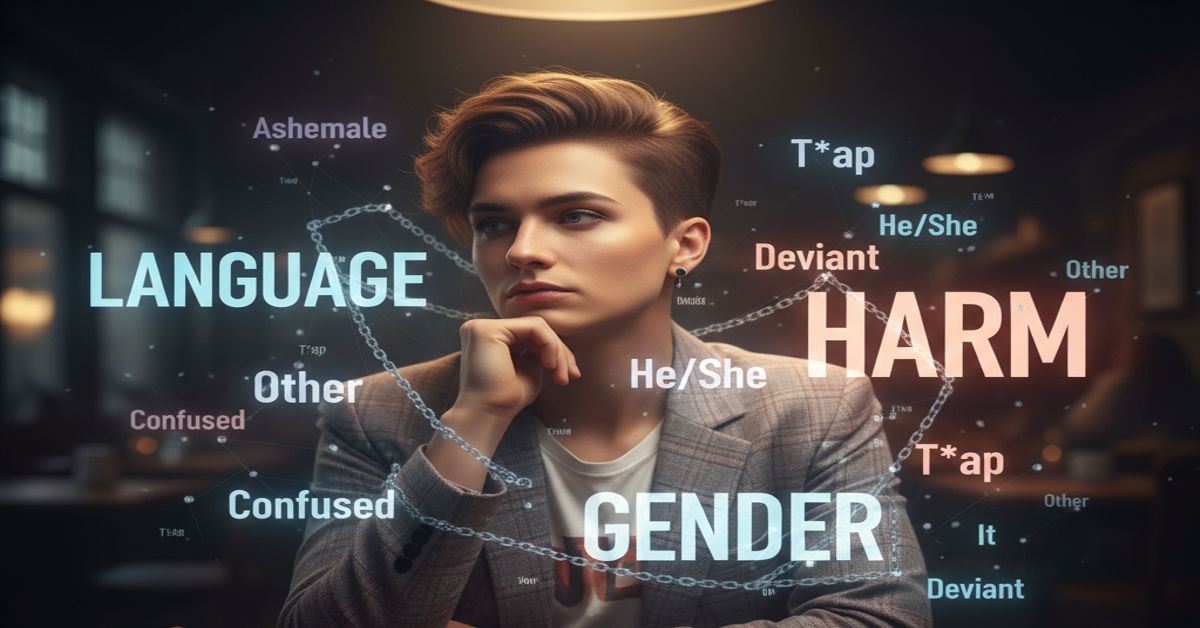
Search interest around the term ashemale continues to spike across forums, search engines and adult platforms, often detached from the real people it targets. Within the first moments of encountering the word, readers are usually trying to understand whether it names an identity, a category or something else entirely. The answer is immediate and uncomfortable. It is not a neutral descriptor, nor a self chosen label rooted in lived experience. It is a pornographic slur that reduces transgender women to anatomy and spectacle.
Language around gender has never been static, but some words carry disproportionate harm because of where they come from and how they are used. Ashemale sits at the intersection of fetish culture, misinformation and algorithmic amplification. Its persistence says less about gender diversity and more about how online ecosystems reward provocative terms long after communities reject them.
This article examines why ashemale remains visible despite near universal rejection by transgender communities, how it differs from legitimate identity terms like transgender and the now dated transsexual and why terminology still shapes public understanding, safety and dignity. Rather than rehearsing definitions, the focus here is cultural consequence. Words do not simply describe reality. They organize attention, signal permission and normalize certain ways of seeing people.
In digital spaces where search intent often substitutes for education, the cost of sloppy language compounds quickly. What begins as curiosity can reinforce dehumanization at scale. Understanding that chain is essential for anyone navigating modern media, from creators and journalists to platform designers and everyday readers.
Where the Term Ashemale Comes From
Ashemale did not emerge from within transgender communities, nor from medical or academic discourse. Its roots are almost entirely commercial. The term gained traction in adult entertainment markets during the late twentieth century, designed to signal a specific fantasy to consumers rather than to reflect identity or lived experience.
By foregrounding genital configuration while framing femininity as novelty, the term collapses a whole person into a single eroticized contradiction. In practice, it treats transgender women as a category of content rather than as people. This framing matters because it shapes how audiences encounter trans bodies before they ever encounter trans voices.
Cultural historians like Susan Stryker have long noted that language tied to spectacle tends to outlive its supposed relevance because it is profitable. Once indexed by search engines and platforms, such terms gain infrastructural inertia. Even when communities reject them, the words remain visible because algorithms reward familiarity over ethics.
This origin story explains why ashemale persists despite clear opposition. It was never meant to evolve. It was meant to sell.
Transgender, Transsexual and the Shift Away From Reduction
Understanding why ashemale is harmful requires contrasting it with legitimate terminology. Transgender functions as an umbrella term centered on gender identity rather than anatomy. It allows room for social transition, non binary identities and diverse expressions without demanding medical intervention.
Transsexual, by contrast, emerged from clinical contexts in the mid twentieth century. It emphasized physical dysphoria and medical transition, often positioning doctors as gatekeepers. While some people still identify with the term, many consider it outdated because it frames gender variance primarily as a medical problem to be corrected.
The difference is not semantic nitpicking. It reflects who holds authority. Transgender language shifted power toward self identification and away from external classification. Ashemale does the opposite. It strips agency entirely, defining people by what others see or desire.
| Term | Core Focus | Community Acceptance | Primary Context |
| Transgender | Gender identity | Broadly accepted | Social and cultural |
| Transsexual | Medical transition | Mixed and declining | Clinical and historical |
| Ashemale | Fetishized anatomy | Rejected | Pornographic markets |
This contrast reveals why intent matters. Identity terms emerge from communities. Slurs emerge from markets.
How Search and Platforms Keep Harmful Terms Alive
One of the most unsettling aspects of ashemale’s persistence is how neutral infrastructure sustains it. Search engines do not evaluate moral weight. They surface what is queried, clicked and monetized. Over time, this creates feedback loops where harmful language appears authoritative simply because it is common.
During a 2024 digital culture symposium in Toronto, I spoke with platform moderation researcher Dr. Elena Ruiz, who studies how slurs migrate across content categories. She noted that terms originating in adult content often leak into general search because algorithms fail to distinguish context from endorsement.
“Visibility creates legitimacy in the eyes of users,” Ruiz said. “When a term appears without friction, people assume it is acceptable or accurate.”
This is not abstract. Transgender advocacy groups have documented how dehumanizing language correlates with harassment and violence. When people are framed as objects or categories, empathy erodes.
Platforms rarely intend this outcome. But intention does not erase impact.
Community Response and Reclamation Limits
Unlike some reclaimed slurs, ashemale has not undergone meaningful reappropriation. Most transgender women explicitly reject it, viewing any attempt at reclamation as constrained by its pornographic baggage. The term does not describe a shared experience or cultural bond. It describes a gaze imposed from outside.
Online communities often respond by building parallel vocabularies and educational resources, pushing accurate terms while flagging harmful ones. Yet the uneven power between community norms and platform economics makes this an uphill battle.
This tension surfaces repeatedly in comment moderation, content tagging and creator guidelines. Community members do the labor of correction, while systems quietly benefit from engagement spikes driven by controversy.
The result is linguistic exhaustion. When people are forced to repeatedly explain why a word is harmful, the harm compounds.
Media Responsibility and the Cost of Neutrality
Journalistic neutrality can become complicity when it treats all terms as equally debatable. Responsible coverage requires judgment. That does not mean censoring reality. It means naming harm clearly.
Several major style guides now advise against using pornographic slurs even in explanatory contexts unless absolutely necessary. When they are used, they must be framed as harmful and avoided elsewhere in the text. This article follows that approach deliberately.
Language choices signal values. Readers notice what is normalized and what is challenged.
For publications like Elevenlabsmagazine.com, which position themselves as authoritative and human centered, precision is not optional. It is the foundation of trust.
Bullet Takeaways
- Ashemale is a pornographic slur, not an identity term
- Transgender language centers self identification rather than anatomy
- Harmful terms persist online due to algorithmic inertia, not community acceptance
- Visibility without context creates false legitimacy
- Media neutrality can unintentionally reinforce dehumanization
- Precise language reduces cultural harm over time
Conclusion
The persistence of ashemale is not a linguistic accident. It is the predictable outcome of systems that reward familiarity, controversy and profit over care. Words travel faster than values online, and without active intervention, the most reductive terms often dominate.
Understanding this dynamic shifts responsibility outward. It is not enough to tell individuals to “know better.” Platforms, publishers and creators all participate in shaping the vocabulary that defines public understanding. Choosing accurate, respectful language is a form of cultural infrastructure work.
There is no perfect solution. Harmful terms will continue to surface. But consistent refusal to legitimize them, paired with clear explanation, changes the terrain over time. Language does not just reflect society. It trains it.
The question is not whether words matter. It is who they are allowed to serve.
FAQs
Is ashemale a transgender identity?
No. It is a pornographic slur rejected by transgender communities and not a self identified gender.
Why do people still search for the term?
Search persistence is driven by adult content indexing and algorithmic feedback loops, not community acceptance.
Is transsexual still an acceptable term?
Some individuals use it, but it is widely considered dated and more medicalized than transgender.
Can slurs ever be reclaimed?
Sometimes, but reclamation depends on community consensus. Ashemale lacks that support.
What term should be used instead?
Transgender woman or simply woman, depending on context and individual preference.